
Every morning is a gift from Allah. Starting your day with a sincere dua sets the right tone for everything ahead. It brings peace to your heart before the world gets busy.
In this collection, you will find over 100 Islamic good morning duas. Each one is simple, meaningful, and easy to read. Whether you are just waking up or sipping your first cup of tea, these duas will help you begin your day with gratitude and faith.
.Best Islamic Good Morning Dua
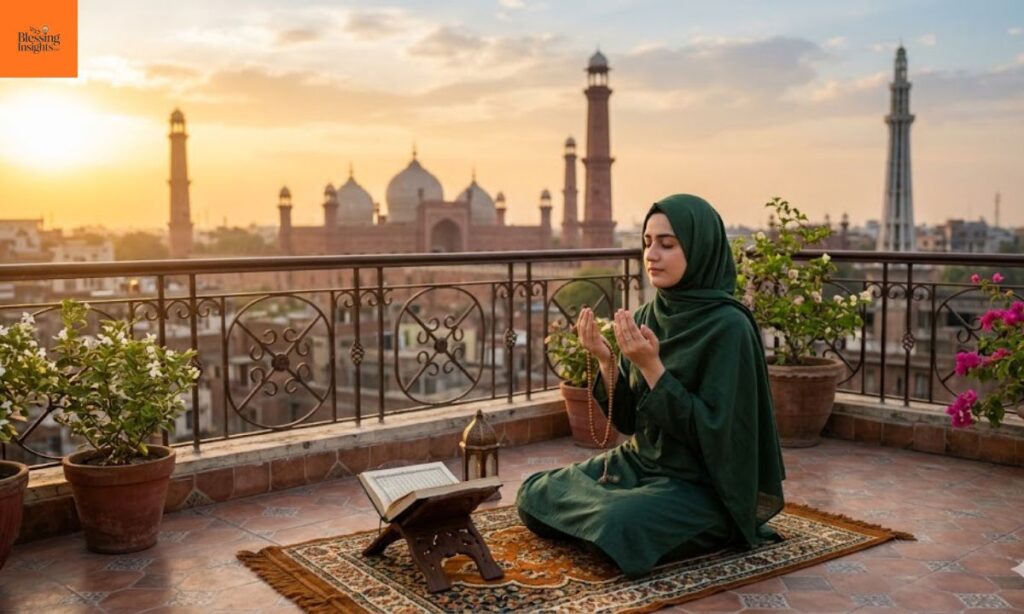
The best dua to say in the morning is the one you say with a full heart. Islam teaches us to remember Allah the moment we open our eyes. Here are some of the most loved morning duas:
- “Alhamdulillahil-ladhi ahyana ba’da ma amatana wa ilayhin-nushur.” (All praise is for Allah who gave us life after death and to Him is the return.)
- “Bismillah, tawakkaltu ‘alallah.” (In the name of Allah, I place my trust in Allah.)
- “Allahuma bika asbahna wa bika amsayna.” (O Allah, by You we enter the morning and by You we enter the evening.)
- “Allahumma inni as’aluka ‘ilman nafi’an.” (O Allah, I ask You for beneficial knowledge.)
- “Subhanakallahumma wa bihamdika.” (Glory be to You, O Allah, and praise.)
- “Rabbi zidni ‘ilma.” (My Lord, increase me in knowledge.)
- “Allahumma ‘afini fi badani.” (O Allah, grant me health in my body.)
- “La ilaha illallah wahdahu la sharika lah.” (There is no god but Allah alone, with no partner.)
- “Allahumma antal-awwalu falaisa qablaka shay’.” (O Allah, You are the First and there is nothing before You.)
- “Asbahna wa asbahal mulku lillah.” (We have entered the morning and the entire dominion belongs to Allah.)
Morning Duas with Hadith References (Authentic Sources)
These duas are not just beautiful words. Each one comes directly from an authenticated narration of the Prophet Muhammad (PBUH), making them among the most powerful and rewarding to recite.
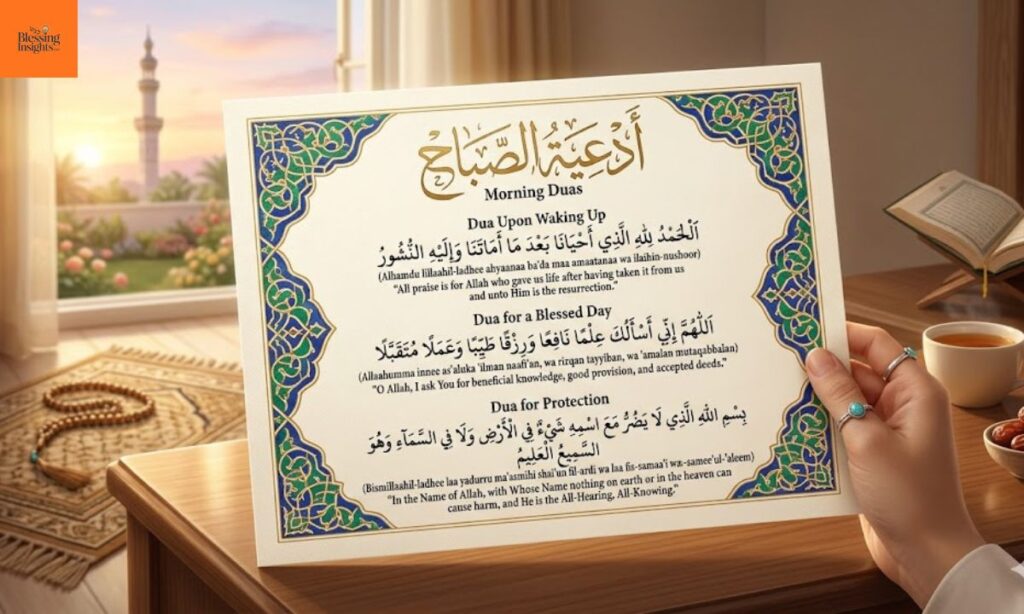
- Dua Upon Waking — Hadith Source: Sahih Bukhari 6312
Arabic: الْحَمْدُ لِلَّهِ الَّذِي أَحْيَانَا بَعْدَ مَا أَمَاتَنَا وَإِلَيْهِ النُّشُورُ
Transliteration: Alhamdulillahil-ladhi ahyana ba’da ma amatana wa ilayhin-nushur.
Meaning: All praise is for Allah who gave us life after having taken it from us, and unto Him is the resurrection.
Hudhaifah (RA) narrated that when the Prophet (PBUH) woke up in the morning, he would recite this dua.
- Dua for the Morning — Hadith Source: Abu Dawood 5076
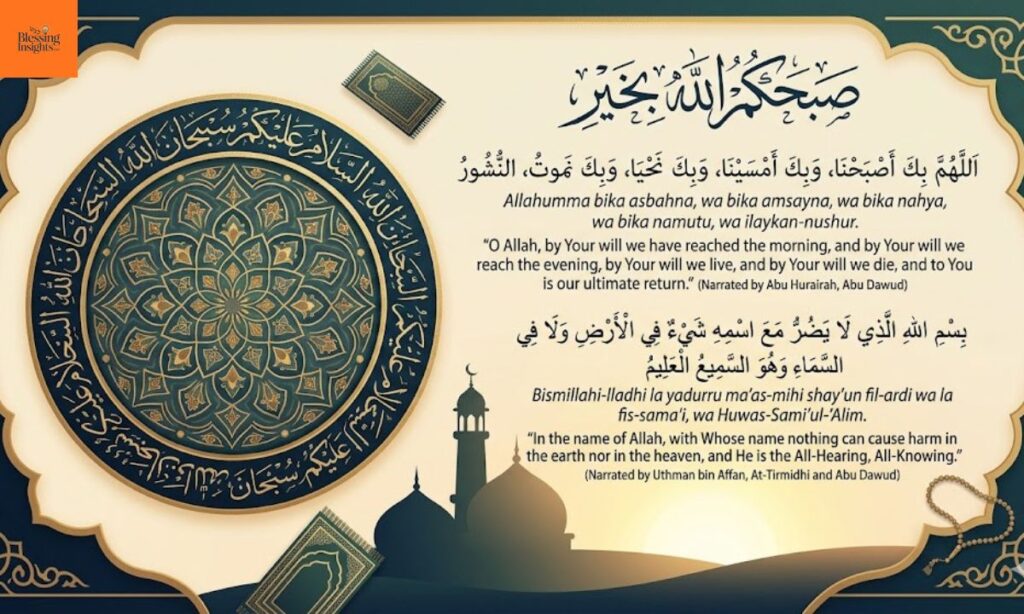
Arabic: اللَّهُمَّ بِكَ أَصْبَحْنَا وَبِكَ أَمْسَيْنَا وَبِكَ نَحْيَا وَبِكَ نَمُوتُ وَإِلَيْكَ النُّشُورُ
Transliteration: Allahumma bika asbahna wa bika amsayna wa bika nahya wa bika namutu wa ilaykan-nushur.
Meaning: O Allah, by You we enter the morning and by You we enter the evening, by You we live and by You we die, and to You is the resurrection.
- Dua for Protection — Hadith Source: Abu Dawood 5074, Ibn Majah
Arabic: بِسْمِ اللَّهِ الَّذِي لَا يَضُرُّ مَعَ اسْمِهِ شَيْءٌ فِي الْأَرْضِ وَلَا فِي السَّمَاءِ وَهُوَ السَّمِيعُ الْعَلِيمُ
Transliteration: Bismillahil-ladhi la yadurru ma’asmihi shay’un fil-ardi wa la fis-sama’i wa huwas-sami’ul-‘alim.
Meaning: In the name of Allah, with whose name nothing in the earth or heaven can cause harm, and He is the All-Hearing, All-Knowing.
Uthman ibn Affan (RA) narrated that the Prophet (PBUH) said: “Whoever recites this three times in the morning and three times in the evening, nothing shall harm him.”
- Dua of Contentment — Hadith Source: Abu Dawood 5072, At-Tirmidhi
Arabic: رَضِيتُ بِاللَّهِ رَبًّا وَبِالْإِسْلَامِ دِينًا وَبِمُحَمَّدٍ نَبِيًّا
Transliteration: Radeetu billahi rabban wa bil-islami deenan wa bi-Muhammadin nabiyya.
Meaning: I am pleased with Allah as my Lord, with Islam as my religion, and with Muhammad (PBUH) as my Prophet.
The Prophet (PBUH) said: “Whoever says this three times in the morning will have his gratitude fulfilled for that day.”
- Dua of Complete Trust — Hadith Source: At-Tirmidhi 3388
Arabic: حَسْبِيَ اللَّهُ لَا إِلَهَ إِلَّا هُوَ عَلَيْهِ تَوَكَّلْتُ وَهُوَ رَبُّ الْعَرْشِ الْعَظِيمِ
Transliteration: Hasbiyallahu la ilaha illa huwa, ‘alayhi tawakkaltu wa huwa rabbul ‘arshil ‘azim.
Meaning: Allah is sufficient for me. There is no god but Him. I have placed my trust in Him and He is the Lord of the Magnificent Throne.
The Prophet (PBUH) said: “Whoever says this seven times in the morning and evening, Allah will take care of whatever concerns him.”
Your 5-Minute Islamic Morning Dua Checklist
Not everyone has 30 minutes in the morning. Here is a quick checklist so you never miss your morning duas even on busy days:
Upon waking: Say Alhamdulillahil-ladhi ahyana ba’da ma amatana (takes 5 seconds).
Before leaving the bathroom: Say Allahumma inni a’udhu bika minal-khubuthi wal-khabaith (protection from evil while entering).
After wudu: Say Ashhadu an la ilaha illallah wa ashhadu anna Muhammadan abduhu wa rasuluh (gates of paradise open for you).
After Fajr: Say Bismillahil-ladhi la yadurru ma’asmihi shay’un three times (full protection for the day in under one minute).
Before leaving home: Say Bismillah, tawakkaltu ‘alallah, wa la hawla wa la quwwata illa billah (takes 5 seconds, brings divine protection for the journey).
Once during commute or breakfast: Say SubhanAllah 33 times, Alhamdulillah 33 times, Allahu Akbar 34 times (can be done silently in traffic or while eating).
This checklist takes under five minutes total and covers protection, gratitude, trust, and remembrance — the four pillars of a blessed Islamic morning.
What is an Islamic Good Morning Dua?
A dua is a personal prayer or supplication to Allah. It is the most direct way a Muslim can speak to their Creator. A good morning dua is a short prayer said after waking up to seek blessings, protection, and guidance for the day.
These duas come from the Quran and authentic Hadith of Prophet Muhammad (PBUH). Saying them in the morning is a Sunnah, meaning it is a practice the Prophet encouraged. It fills your morning with barakah and keeps your mind focused on what truly matters.
You do not need to be a scholar to say a morning dua. You just need sincerity. Even a few words said with a clean heart are heard by Allah.
Powerful Islamic Good Morning Duas for Peace
These duas are specifically for inner calm and peace of mind:
- “Allahumma inni as’alukas-sihhata wal-‘afiyah.” (O Allah, I ask You for health and well-being.)
- “Allahumma inni a’udhu bika minal-hammi wal-hazan.” (O Allah, I seek refuge in You from worry and grief.)
- “Hasbunallahu wa ni’mal wakeel.” (Allah is enough for us and He is the best disposer of affairs.)
- “Allahumma as-lih li sha’ni kullahu.” (O Allah, rectify all my affairs.)
- “Allahumma inni as’aluka al-‘afu wal-‘afiyah.” (O Allah, I ask You for pardon and well-being.)
- “Rabbi inni massaniyad-durru wa anta arhamur-rahimeen.” (My Lord, adversity has touched me and You are the Most Merciful.)
- “Allahumma la sahla illa ma ja’altahu sahla.” (O Allah, nothing is easy except what You make easy.)
- “Tawakkaltu ‘alallahi rabbil ‘arshil ‘azeem.” (I place my trust in Allah, Lord of the Mighty Throne.)
- “Allahumma inni as’alukal-hudaa wat-tuqa.” (O Allah, I ask You for guidance and piety.)
- “Allahumma yassir wala tu’assir.” (O Allah, make things easy and do not make them difficult.)
- “Allahumma ‘afini fi sam’i.” (O Allah, grant me health in my hearing.)
- “Allahumma ‘afini fi basari.” (O Allah, grant me health in my sight.)
- “La hawla wa la quwwata illa billah.” (There is no power or might except with Allah.)
- “Allahumma innaka ‘afuwwun tuhibbul ‘afwa fa’fu ‘anni.” (O Allah, You are the Pardoner and You love to pardon, so pardon me.)
- “Allahumma aj’al awwala hadhan-nahari salahan.” (O Allah, make the beginning of this day righteous.)
Short Islamic Good Morning Duas
Sometimes a few words are all you need. These short duas are easy to memorize and say every morning:
- “Bismillah.” (In the name of Allah.)
- “Alhamdulillah.” (All praise is for Allah.)
- “SubhanAllah wa bihamdihi.” (Glory be to Allah and praise be to Him.)
- “Astaghfirullah.” (I seek forgiveness from Allah.)
- “Hasbiyallahu la ilaha illa huw.” (Allah is sufficient for me, there is no god but Him.)
- “Allahumma barik lana.” (O Allah, bless us.)
- “Ya Hayyu ya Qayyum, bi rahmatika astaghith.” (O Ever-Living, O Sustainer, by Your mercy I seek help.)
- “Allahumma tawwib ‘alayya.” (O Allah, accept my repentance.)
- “Rabbi yassir.” (My Lord, make it easy.)
- “Innallaha ma’ana.” (Indeed, Allah is with us.)
- “Allahumma shfa’ni.” (O Allah, heal me.)
- “Rabbi inni dha’eef.” (My Lord, I am weak.)
- “Allahumma ij’alni shakiran.” (O Allah, make me among the grateful.)
- “Ya Allah, kun ma’i.” (O Allah, be with me.)
- “Allahumma salli ‘ala Muhammad.” (O Allah, send blessings upon Muhammad.)
Islamic Good Morning Duas for Friends
Sharing a dua with a friend is one of the most beautiful gifts. Here are duas you can share or say for your loved ones:
- “Barakallahu fi yawmik.” (May Allah bless your day.)
- “Allahumma barik fi ashaabi.” (O Allah, bless my friends.)
- “Ja’alakallahu minal muflihin.” (May Allah make you among the successful.)
- “Allahumma ahfaz ashaabi.” (O Allah, protect my friends.)
- “Sabahul khair wa sabahun noor.” (Good morning and a morning of light.)
- “May Allah fill your morning with peace and your heart with gratitude.”
- “Allahumma arzuq ashaabi rizqan halalan.” (O Allah, grant my friends lawful provision.)
- “May Allah make today easy for you and everyone you love.”
- “Allahumma thabbit ashaabi ‘alal haqq.” (O Allah, keep my friends firm upon the truth.)
- “May your morning begin with the name of Allah and end with His gratitude.”
- “Allahumma saddid khutwata ashaabi.” (O Allah, guide the steps of my friends.)
- “Wishing you a morning full of barakah and smiles.”
- “May Allah grant you health, happiness, and hidayah today.”
- “Allahumma ij’al yawmahu khayran min ams.” (O Allah, make his/her day better than yesterday.)
- “May Allah protect you from every harm this morning.”
Islamic Good Morning Duas in Arabic
Reading duas in Arabic carries extra beauty and closeness to the original Sunnah:
- أَصْبَحْنَا وَأَصْبَحَ الْمُلْكُ لِلَّهِ
- الْحَمْدُ لِلَّهِ الَّذِي أَحْيَانَا بَعْدَ مَا أَمَاتَنَا
- اللَّهُمَّ بِكَ أَصْبَحْنَا وَبِكَ أَمْسَيْنَا
- بِسْمِ اللَّهِ الَّذِي لَا يَضُرُّ مَعَ اسْمِهِ شَيْءٌ
- اللَّهُمَّ إِنِّي أَسْأَلُكَ الْعَافِيَةَ
- سُبْحَانَكَ اللَّهُمَّ وَبِحَمْدِكَ
- لَا إِلَهَ إِلَّا اللَّهُ وَحْدَهُ لَا شَرِيكَ لَهُ
- اللَّهُمَّ أَنْتَ رَبِّي لَا إِلَهَ إِلَّا أَنْتَ
- رَبِّ زِدْنِي عِلْمًا
- حَسْبِيَ اللَّهُ لَا إِلَهَ إِلَّا هُوَ
- يَا حَيُّ يَا قَيُّومُ بِرَحْمَتِكَ أَسْتَغِيثُ
- اللَّهُمَّ عَافِنِي فِي بَدَنِي
- أَعُوذُ بِاللَّهِ مِنَ الشَّيْطَانِ الرَّجِيمِ
- اللَّهُمَّ إِنِّي أَعُوذُ بِكَ مِنَ الْهَمِّ وَالْحَزَنِ
- تَوَكَّلْتُ عَلَى اللَّهِ
Islamic Good Morning Duas in English
For those who feel more comfortable in English, these duas carry the same sincerity:
- “O Allah, I thank You for waking me up this morning.”
- “O Allah, guide my steps today and keep me on the right path.”
- “O Allah, protect me from every harm this morning.”
- “O Allah, grant me patience and strength for what lies ahead.”
- “O Allah, make my day productive and full of Your blessings.”
- “O Allah, I start this day in Your name and I ask for Your mercy.”
- “O Allah, keep my family safe and healthy today.”
- “O Allah, open the doors of rizq for me and my loved ones.”
- “O Allah, help me be kind, grateful, and humble today.”
- “O Allah, accept my prayers and forgive my shortcomings.”
Islamic Good Morning Duas with Meaning
Understanding the meaning of a dua deepens your connection with it:
- “Alhamdulillahil-ladhi ‘afani fi jasadi.” — All praise is for Allah who gave me health in my body. This dua reminds you that health is not guaranteed, it is a daily gift.
- “Allahumma inni as’aluka khayra hadhal yawm.” — O Allah, I ask You for the good of this day. This opens your heart to whatever goodness Allah has planned for you.
- “Allahuma ij’al awwala amri salahan.” — O Allah, make the beginning of my matter righteous. A powerful reminder that how you start matters.
- “Allahumma a’inni ‘ala dhikrika wa shukrika wa husni ‘ibadatik.” — O Allah, help me in remembering You, thanking You, and worshipping You beautifully. This is one of the greatest morning intentions you can set.
- “Allahumma inni as’aluka min fadlik.” — O Allah, I ask You from Your bounty. Simple but full of trust and reliance on Allah alone.
Morning Duas for Rizq (Sustenance)
Many Muslims worry about provision. These duas place your trust in Allah, the true Provider:
- “Allahumma arzuqni rizqan halalan tayyiban.” (O Allah, grant me lawful and good provision.)
- “Allahumma ij’al awsa’a rizqika ‘alayya ‘inda kibari sinni.” (O Allah, expand my provision in my old age.)
- “Allahumma innaka ta’lamu anna laysa li yadun tusdi’u nafsahi.” (O Allah, You know I have no one but You.)
- “Allahumma ikfini bihalaalika ‘an haraamik.” (O Allah, suffice me with what is lawful so I have no need for what is forbidden.)
- “Rabbi inni limaa anzalta ilayya min khayrin faqeer.” (My Lord, I am in need of whatever good You send me.)
- “Allahumma barik lana fima razaqtana.” (O Allah, bless us in what You have provided for us.)
- “Allahumma yassir lana arzaqana.” (O Allah, make our provision easy for us.)
- “Allahumma la takilna ila anfusina tarfata ‘ayn.” (O Allah, do not leave us to ourselves even for a blink of an eye.)
Islamic Good Morning Messages to Share
Share these warm Islamic messages with family and friends:
- “Good morning! May Allah bless your day and make every step easy for you.”
- “Rise with gratitude. Allah gave you another day to do good.”
- “Sabah al-khair! May your morning be filled with the light of iman.”
- “Good morning! Say Alhamdulillah and begin your day with a smile.”
- “May Allah make this morning a beginning of good things for you and your family.”
- “Good morning! Remember, every new day is a new chance to get closer to Allah.”
- “Start your day with Bismillah and watch how Allah puts barakah in everything.”
- “Good morning! May your heart be light and your path be clear today.”
- “Wishing you a morning full of dhikr, peace, and blessings from Allah.”
- “Good morning! Make dua before you open any screen. Allah is always listening.”
Morning Dhikr for a Peaceful Start
Dhikr means the remembrance of Allah. These short phrases can be repeated many times each morning:
- SubhanAllah — Glory be to Allah (say 33 times)
- Alhamdulillah — All praise is for Allah (say 33 times)
- Allahu Akbar — Allah is the Greatest (say 34 times)
- La ilaha illallah — There is no god but Allah
- Astaghfirullah — I seek forgiveness from Allah
- SubhanAllahi wa bihamdihi, SubhanAllahil Azeem — Glory be to Allah and His is the praise, Glory be to Allah the Magnificent
- Salawat — Allahumma salli ‘ala Muhammad
- A’udhu billahi minash-shaytanir-rajeem — I seek refuge in Allah from the cursed devil
- Laa hawla wa laa quwwata illa billah — No power or might except with Allah
- Hasbunallahu wa ni’mal wakeel — Allah is enough for us
Subha Bakhair Dua
Subha Bakhair means “Good Morning” in Urdu and Arabic. Here are beautiful Subha Bakhair duas to start with:
- “Subha Bakhair! Allahumma barik lana fi yawmina hadha.” (Good Morning! O Allah, bless us in this day of ours.)
- “Subha Bakhair! Har subah Allah ki rehmat ka naya silsila hai.” (Good Morning! Every morning is a new chain of Allah’s mercy.)
- “Subha Bakhair! May Allah fill your morning with His noor and barakah.”
- “Subha Bakhair! Aaj ka din Allah ke naam se shuru karo.” (Good Morning! Begin today in the name of Allah.)
- “Subha Bakhair! Allah tumhara har din asaan kare.” (Good Morning! May Allah make every day easy for you.)
Morning Dua in Arabic with Translation
These are complete duas in Arabic followed by their English meaning:
- بِسْمِ اللَّهِ الرَّحْمَنِ الرَّحِيمِ “Bismillahir-rahmanir-raheem.” — In the name of Allah, the Most Gracious, the Most Merciful.
- اللَّهُمَّ أَنْتَ رَبِّي لَا إِلَهَ إِلَّا أَنْتَ، خَلَقْتَنِي وَأَنَا عَبْدُكَ “Allahumma anta rabbi la ilaha illa ant, khalaqtani wa ana ‘abduk.” — O Allah, You are my Lord, there is no god but You. You created me and I am Your servant.
- اللَّهُمَّ إِنِّي أَصْبَحْتُ مِنْكَ فِي نِعْمَةٍ وَعَافِيَةٍ وَسِتْرٍ “Allahumma inni asbahtu minka fi ni’matin wa ‘afiyatin wa sitr.” — O Allah, I have entered the morning in Your blessing, health, and protection.
- رَبَّنَا آتِنَا فِي الدُّنْيَا حَسَنَةً وَفِي الْآخِرَةِ حَسَنَةً “Rabbana atina fid-dunya hasanatan wa fil-akhirati hasanatan.” — Our Lord, give us good in this world and good in the hereafter.
Islamic Good Morning Duas for WhatsApp
These are short, beautiful, and perfect for WhatsApp status or messages:
- “☀️ Bismillah. A new morning, a new mercy. Alhamdulillah.”
- “🌿 Good morning! Say Subhanallah 33 times and feel the peace.”
- “🤲 Allahumma barik lana fi yawmina. A blessed morning to all.”
- “☀️ Every sunrise is Allah saying: I gave you another chance. Use it well.”
- “🌸 Good morning! May Allah put barakah in your time, health, and rizq today.”
- “🕌 Sabah al-khair! Start with Fajr and let the rest of the day follow with ease.”
- “🌙 Good morning! Whoever says Ayatul Kursi after every prayer is protected until the next.”
- “☀️ Rise and remember Allah. The angels are writing your deeds from this very moment.”
What Happens When You Make Morning Duas? (Spiritual and Practical Benefits)
You earn the protection of Allah for the entire day. The Prophet (PBUH) specifically taught duas that serve as a shield until evening. Reciting Bismillahil-ladhi la yadurru three times is one of them.
Your rizq increases. The morning hours right after Fajr are the most barakah-filled time for earning provision. The Prophet (PBUH) prayed: “O Allah, bless my Ummah in their early mornings.” (Abu Dawood, Ibn Majah)
The angels write continuous reward. When you sit in your prayer place after Fajr making dhikr until sunrise, the angels write the reward of a complete Hajj and Umrah for you. This is from an authentic narration in At-Tirmidhi.
Your anxiety decreases. Saying “La hawla wa la quwwata illa billah” removes worry from the heart. It is called “one of the treasures of paradise” in Sahih Bukhari.
You start from a place of surrender, not stress. When your first conscious act of the day is to say Alhamdulillah and place your affairs in Allah’s hands, you approach the day differently. You do not carry the weight alone.
Islamic Good Morning Duas in Urdu
These duas and messages are in Urdu for those who feel closest to Allah in their mother tongue:
- “اللہ تمہاری صبح کو بابرکت بنائے۔” (May Allah make your morning full of blessings.)
- “ہر صبح اللہ کی طرف سے ایک نئی رحمت ہے۔” (Every morning is a new mercy from Allah.)
- “بسم اللہ سے دن شروع کرو، اللہ ہر کام میں برکت دے گا۔” (Start the day with Bismillah, Allah will put barakah in every task.)
- “صبح بخیر! اللہ آپ کو ہمیشہ اپنی حفاظت میں رکھے۔” (Good morning! May Allah always keep you in His protection.)
- “اللہ کا شکر ادا کرو کہ اس نے ایک اور صبح عطا کی۔” (Thank Allah for granting you yet another morning.)
- “دعا کرو، اللہ سنتا ہے۔ صبح بخیر۔” (Make dua, Allah listens. Good morning.)
Importance of Morning Duas in Islam
Islam places enormous value on the morning hours. The Prophet Muhammad (PBUH) said that the early hours of the morning are blessed and full of barakah. Making dua in the morning is not just a habit, it is an act of worship.
When you say a morning dua, you are declaring that everything in your day belongs to Allah. You are asking His permission before you take a single step. This builds a relationship of total trust and reliance on your Creator.
Morning duas also protect you. Many of the authentic duas from the Hadith were specifically taught by the Prophet (PBUH) as shields against evil, anxiety, and harm. They are not just words. They are armor.
Starting your day without the remembrance of Allah is like starting a journey without a map. Your heart feels restless and your mind wanders. But when you begin with dua, dhikr, and gratitude, your entire day shifts. You feel grounded, calm, and guided.
Make it a habit. Even one sincere dua every morning is enough to invite the mercy of Allah into your entire day.
Islamic Good Morning Duas in Hindi (हिंदी)
Millions of Muslims in India and across South Asia feel closest to Allah when they read duas in Hindi. Here are some transliterations and meanings in Hindi for easy sharing:
“Alhamdulillah — अल्हम्दुलिल्लाह — तमाम तारीफें अल्लाह के लिए हैं जिसने हमें नींद के बाद जिंदगी दी।” (All praise is for Allah who gave us life after sleep.)
“Bismillah — बिस्मिल्लाह — अल्लाह के नाम से शुरुआत करता हूँ।” (I begin in the name of Allah.)
“Allahumma inni as’aluka khayra hadhal yawm — ऐ अल्लाह, मैं आज के दिन की भलाई मांगता हूँ।” (O Allah, I ask You for the good of this day.)
“Subhanallah — सुबहानअल्लाह — अल्लाह की पाकीज़गी बयान करता हूँ।” (Glory be to Allah.)
“Ya Allah, mujhe aaj ke din apni rehmat mein shamil kar — ऐ अल्लाह, आज के दिन मुझे अपनी रहमत में शामिल फरमा।” (O Allah, include me in Your mercy today.)
Special Morning Duas for Each Day of the Week
Friday Morning Dua (Jumu’ah) — The Most Blessed Day of the Week
On Jumu’ah, increase your recitation of Durood Ibrahim in the morning. The Prophet (PBUH) said: “Whoever sends blessings upon me on Friday, Allah will send eighty blessings upon him.” Begin Friday mornings by saying Allahumma salli ‘ala Muhammadin wa ‘ala aali Muhammadin kama sallayta ‘ala Ibrahima… at least ten times.
Also recite Surah Al-Kahf on Friday mornings. The Prophet (PBUH) said: “Whoever reads Surah Al-Kahf on Friday, a light will shine for him between two Fridays.”
Monday and Thursday Morning Dua
These are the days the Prophet (PBUH) fasted voluntarily. On Monday mornings, he said: “Deeds are presented on Mondays and Thursdays, and I love for my deeds to be presented while I am fasting.” Begin Monday and Thursday mornings with extra istighfar and the intention to fast if you are able.
Morning Verses from the Quran to Start Your Day
The Quran itself contains powerful words that serve as a spiritual shield every morning. Reading even a few verses after Fajr is one of the most recommended acts in Islam.
Surah Al-Fatiha — Read every morning. Allah revealed that He responds to each verse of Surah Al-Fatiha as you recite it. It is the opening of the Quran and the most repeated prayer in Islam. Every Muslim recites it at least 17 times a day in salah, but reading it additionally in the morning brings extra barakah.
Last Two Verses of Surah Al-Baqarah (2:285-286) — The Prophet (PBUH) said: “Whoever recites the last two verses of Surah Al-Baqarah at night, they will be sufficient for him.” Many scholars extend this to the morning as well. These verses declare complete faith in Allah and ask Him not to burden us beyond what we can bear.
Ayatul Kursi (2:255) — The greatest verse in the Quran. Reciting it every morning brings protection until evening. The Prophet (PBUH) said: “Whoever recites Ayatul Kursi in the morning will be in the protection of Allah until the evening.” (Al-Hakim)
Surah Al-Ikhlas, Al-Falaq, and An-Nas — The Prophet (PBUH) used to recite these three surahs three times in the morning and three times in the evening. He would then blow into his hands and wipe over his body. This is a complete spiritual shield for the day.
Islamic Good Morning Duas for Specific Situations
Morning Dua for Students and Those Seeking Knowledge
Arabic: اللَّهُمَّ إِنِّي أَسْأَلُكَ عِلْمًا نَافِعًا وَرِزْقًا طَيِّبًا وَعَمَلًا مُتَقَبَّلًا
Transliteration: Allahumma inni as’aluka ‘ilman nafi’an wa rizqan tayyiban wa ‘amalan mutaqabbala.
Meaning: O Allah, I ask You for beneficial knowledge, good provision, and accepted deeds.
Source: Ibn Majah 925. The Prophet (PBUH) used to say this every morning after Fajr prayer. If you are a student, professional, or anyone who seeks to grow, this dua is perfect for you.
Morning Dua for Those Going Through Hardship or Anxiety
Arabic: اللَّهُمَّ إِنِّي أَعُوذُ بِكَ مِنَ الْهَمِّ وَالْحَزَنِ وَأَعُوذُ بِكَ مِنَ الْعَجْزِ وَالْكَسَلِ
Transliteration: Allahumma inni a’udhu bika minal-hammi wal-hazani wa a’udhu bika minal-‘ajzi wal-kasali wa a’udhu bika minal-jubni wal-bukhli wa a’udhu bika min ghalabatid-dayni wa qahrir-rijal.
Meaning: O Allah, I seek refuge in You from worry and grief, from weakness and laziness, from cowardice and miserliness, from being overwhelmed by debt and overpowered by people.
Source: Sahih Bukhari 6369. If you wake up heavy-hearted, anxious, or overwhelmed, begin your morning with this dua.
Morning Dua for Parents
Allahumma ighfir li wa liwalidayya warhamhuma kama rabbayanee saghira.
Meaning: O Allah, forgive me and my parents and have mercy on them as they raised me when I was young.
Every parent you make dua for earns you reward. Every child who makes this dua for their parents honors one of the greatest obligations in Islam.
Morning Dua When Leaving the House
Arabic: بِسْمِ اللَّهِ تَوَكَّلْتُ عَلَى اللَّهِ وَلَا حَوْلَ وَلَا قُوَّةَ إِلَّا بِاللَّهِ
Transliteration: Bismillah, tawakkaltu ‘alallah, wa la hawla wa la quwwata illa billah.
Meaning: In the name of Allah, I place my trust in Allah, and there is no power or might except with Allah.
Source: Abu Dawood 5095. The Prophet (PBUH) said: “Whoever says this when leaving his house, it will be said to him: You are guided, protected, and taken care of.” Say this every morning before you step out the door.
A Complete Islamic Morning Routine (Step by Step)
Step 1 — Upon Opening Your Eyes (Before Getting Out of Bed) Recite the waking dua: Alhamdulillahil-ladhi ahyana ba’da ma amatana. Sit up slowly and do not rush out of bed. These first seconds set the spiritual tone for everything.
Step 2 — Use the Miswak or Brush Your Teeth This is a Sunnah the Prophet (PBUH) followed every morning. Starting with a clean mouth prepares you for Fajr prayer and recitation of Quran.
Step 3 — Perform Wudu with the Dua While making wudu, recite Bismillah at the start. After completing wudu, say: “Ashhadu an la ilaha illallah wa ashhadu anna Muhammadan abduhu wa rasuluh.” The Prophet (PBUH) said the gates of paradise are opened for whoever says this.
Step 4 — Pray Fajr Fajr is the anchor of the entire Islamic morning routine. Everything else in this list is secondary to this. Allah says in the Quran: “Establish prayer at the decline of the sun until the darkness of the night and also the Quran of dawn. Indeed, the recitation of dawn is ever witnessed.” (Quran 17:78)
Step 5 — Recite Morning Adhkar (From Fajr to Sunrise) This is the golden window. Read your morning duas and dhikr in this time. The Prophet (PBUH) said: “Whoever prays Fajr and then sits in his place of prayer until sunrise and then prays two rak’ahs, he will have the reward of a complete Hajj and Umrah.” (At-Tirmidhi)
Step 6 — Recite Ayatul Kursi Read Ayatul Kursi once after Fajr. The Prophet (PBUH) said: “Whoever recites Ayatul Kursi after every obligatory prayer, nothing will prevent him from entering paradise except death.” (An-Nasa’i)
Step 7 — Say the Three Tasbihat 33 Times Each SubhanAllah (33 times), Alhamdulillah (33 times), Allahu Akbar (34 times). Total: 100 tasbih. This takes less than five minutes and carries immense reward.
Step 8 — Make Personal Dua After all the above, speak to Allah in your own words. Ask for your specific needs. This is your personal conversation with your Creator. There is no script needed here.
Conclusion
Morning duas are one of the simplest and most powerful ways to connect with Allah every single day. You do not need a long time or perfect Arabic. You just need an honest heart and a willing tongue.
From the moment you wake up, you have an opportunity to invite peace, barakah, and protection into your life. Use it. Say Alhamdulillah. Say Bismillah. Make your dua. And trust that Allah is always listening.
May Allah accept all your duas, bless your mornings, and fill every day of your life with His infinite mercy. Ameen.
Frequently Asked Questions
What is the best dua to say in the morning in Islam?
The best morning dua is “Alhamdulillahil-ladhi ahyana ba’da ma amatana” which means all praise is for Allah who gave us life after death. It is simple, authentic, and deeply meaningful.
Can I say morning duas in English?
Yes, you can make dua in any language. Allah understands every tongue and what matters most is the sincerity in your heart.
What time should I read morning duas?
Morning duas should be read after Fajr prayer until sunrise. This time is considered the most blessed part of the day in Islam.
Is there a specific dua for protection in the morning?
Yes, reciting Ayatul Kursi and the last two verses of Surah Al-Baqarah in the morning are known to provide protection throughout the day.
How many times should I repeat morning dhikr?
SubhanAllah, Alhamdulillah, and Allahu Akbar are each recited 33 times in the morning. This is based on the authentic Sunnah of the Prophet (PBUH).
Can I share morning duas with friends on WhatsApp?
Absolutely. Sharing Islamic duas and reminders with friends is a form of sadaqah jariyah. Every person who benefits from it is a reward for you.
What is the difference between dua and dhikr?
Dua is a personal supplication where you ask Allah for something. Dhikr is the remembrance of Allah through repeated phrases like SubhanAllah and Alhamdulillah.
Are morning duas from the Quran or Hadith?
Many morning duas come from authentic Hadith collections like Sahih Bukhari and Muslim. Some are also taken directly from Quranic verses and supplications of the Prophets.
What if I forget to say my morning dua?
You can still say it any time during the day. Allah is always ready to hear you and no dua ever goes to waste.
Why do Muslims start the day with Bismillah?
Starting with Bismillah means you are beginning everything in the name of Allah. It invites His blessings and keeps Shaytan away from your actions.
Is Fajr prayer connected to morning duas?
Yes, morning duas are most powerful when said right after Fajr prayer. The Prophet (PBUH) always made dua after his prayers and encouraged his companions to do the same.
What does Subha Bakhair mean in Islam?
Subha Bakhair simply means Good Morning in Urdu and Arabic. When said with a dua, it becomes a beautiful Islamic greeting that carries warmth and blessings.
Can children learn morning duas easily?
Yes, short duas like Bismillah, Alhamdulillah, and Ayatul Kursi are easy for children to memorize. Teaching them early builds a lifelong habit of remembering Allah.
Do morning duas really bring peace of mind?
Yes, many Muslims experience genuine calm and clarity after reciting morning duas. It is because you are handing your worries to Allah and trusting His plan completely.
Is there a morning dua for rizq and provision?
Yes, “Allahumma arzuqni rizqan halalan tayyiban” is a beautiful dua asking Allah for lawful and good provision. It is highly recommended to say it every morning.
What is the morning dua after Fajr prayer?
After Fajr prayer, the most recommended morning dua is: “Allahumma inni as’aluka ‘ilman nafi’an wa rizqan tayyiban wa ‘amalan mutaqabbala.” This comes from a narration in Ibn Majah and was recited by the Prophet (PBUH) specifically after the Fajr prayer.
What is the dua for protection in the morning from evil eye?
“Bismillahil-ladhi la yadurru ma’asmihi shay’un fil-ardi wa la fis-sama’i wa huwas-sami’ul-‘alim.” Recite it three times. The Prophet (PBUH) promised that nothing shall harm whoever says this in the morning. (Abu Dawood 5088)
What surahs should I read every morning?
The Prophet (PBUH) recommended reading Surah Al-Ikhlas, Surah Al-Falaq, and Surah An-Nas three times each in the morning. He would then blow on his hands and wipe over his body. Also read Ayatul Kursi once for full-day protection and the last two verses of Surah Al-Baqarah.
Is there a morning dua for success in work and business?
Yes. “Allahumma inni as’aluka khayra hadhal yawm, fatahahu wa nasrahu wa nurahu wa barakatahu wa hudahu.” This dua from Abu Dawood asks Allah for the day’s success, victory, light, blessing, and guidance. It is perfect to say before starting work.
What is the morning dua for gratitude in Islam?
“Allahumma ma asbaha bi min ni’matin aw bi ahadin min khalqika faminka wahdaka la sharika lak, falakal hamdu wa lakash-shukr.” Meaning: O Allah, whatever blessing I or any of Your creation have risen upon is from You alone. For You is all praise and all thanks. The Prophet (PBUH) said whoever says this in the morning has offered his day’s full thanks to Allah.

James Alexander is a passionate writer with over 4 years of experience creating helpful, engaging, and easy-to-read content. He enjoys writing about prayers, blessings, lifestyle topics, and inspirational ideas that connect with readers around the world. With a strong focus on quality and originality, James works to create content that informs, inspires, and adds value to every reader’s experience.